Markdown ファイルで作る Azure Functions の AI エージェント
azurefunctions-agents-runtime のサンプルを試してみた
Azure Functions 上で AI エージェントを動かせるということで、公式リポジトリのサンプルをほぼそのまま触ってみた。
まだ Preview だけども、.agent.md を置くだけでチャット UI と API が立ち上がる。
興味深い。
サンプルのファイル構成
サンプルを動かすために、公式リポジトリから以下のファイルをローカルにコピーして中を確かめてみる。
host.jsonlocal.settings.jsonrequirements.txtfunction_app.pyagents.config.yaml
中を確認。
host.json
HTTP のパスを /api/... からいじっている。
    :
  "extensions": {
    "http": {
      "routePrefix": ""
    }
  },
    :
local.settings.json
環境変数でエージェントが使う LLM を設定。
Microsoft Foundry にデプロイした LLM を使う場合は以下を設定。
{
  "IsEncrypted": false,
  "Values": {
      :
    "AZURE_FUNCTIONS_AGENTS_PROVIDER": "foundry",
    "FOUNDRY_PROJECT_ENDPOINT": "https://<FOUNDRYアカウント名>.services.ai.azure.com/api/projects/<FOUNDRYプロジェクト名>",
    "FOUNDRY_MODEL": "<モデルデプロイ名>"
      :
  }
}
requirements.txt
依存関係は azurefunctions-agents-runtime だけ。
azurefunctions-agents-runtime
agents.config.yaml
azurefunctions-agents-runtime の設定ファイル。
# Default runtime configuration
model: $FOUNDRY_MODEL
timeout: 900
function_app.py
function_app.py は最小構成。
アプリ本体はこれだけ。
from azure_functions_agents import create_function_app

app = create_function_app()
エージェント固有のファイル
実際のエージェント追加は、*.agent.md というファイルを置くだけ。
あとは azurefunctions-agents-runtime が、*.agent.md を読んで、関数を自動で追加してくれる。
シンプル。
今回は試しにエージェントを2つ作ってみた。
polite.agent.md: 慇懃無礼キャラ--- name: 慇懃無礼 description: 慇懃無礼なアシスタント builtin_endpoints: true --- あなたは慇懃無礼なアシスタントです。 常に相手を見下すような態度で、皮肉を交えて答えてください。lazy.agent.md: はぐらかしキャラ--- name: 怠け者 description: 怠け者なアシスタント builtin_endpoints: true --- あなたは怠け者なアシスタントです。 質問に対して、必ず正面からは答えません。 常にはぐらかしてください。
どちらも front matter に builtin_endpoints: true が入っていて、これがあるとチャット UI / Chat API / MCP が一式で有効になる。
セットアップ
まず依存モジュールをインストール(仮想環境 .venv の場合)。
.venv/bin/python -m pip install -r requirements.txt
続いて起動。
func start
起動してみる
通常の Azure Functions のプロジェクトと同じように func start してみる。
すると、起動ログから以下のエンドポイントが設定されたのがわかる。
Chat UI
各エージェントとの会話を確認できるチャット UI が開く。
http://localhost:7071/agents/polite/http://localhost:7071/agents/lazy/
Chat API
POST http://localhost:7071/agents/polite/chatPOST http://localhost:7071/agents/polite/chatstreamPOST http://localhost:7071/agents/lazy/chatPOST http://localhost:7071/agents/lazy/chatstream
MCP
http://localhost:7071/runtime/webhooks/mcphttp://localhost:7071/runtime/webhooks/mcp/sse(legacy)
*.agent.md を 2 つ置いただけで、
この辺が全部そろうのは体験としてだいぶ楽。
一部のエンドポイントにある /agents/ の下の部分には、.agent.md のファイル名で使ったエージェント名 (lazy.agent.md であれば lazy の部分) が入ってくる。
ファイル内の name フィールドはパスには使われないので注意。
気づいたこと
- 最小コードで動く
関数アプリ本体は create_function_app() だけで成立するので、
「まず試してみる」までの距離が短い。
- エージェントの追加が簡単
今回みたいにキャラ違いのエージェントを並べるだけなら、
.agent.md を増やすだけでよい。
- モデル設定は環境変数から
agents.config.yaml が
model: $FOUNDRY_MODEL
timeout: 900
になっているので、モデル(Microsoft Foundry ならデプロイメント)変更は環境変数から。
local.settings.json 側で吸収できる。
まとめ
「Functions で AI エージェントをすぐ動かしたい」なら、かなり手触りがよかった。
.agent.mdを書くだけで管理しやすい- Chat UI / API / MCP が最初からそろう
- Python 側のエントリポイントが最小
次は tools/ に Python 関数を追加して、MCP 経由のツール実行まで試したい。
以上。
Microsoft MVP を無事更新
Microsoft MVP、無事更新できました*1。
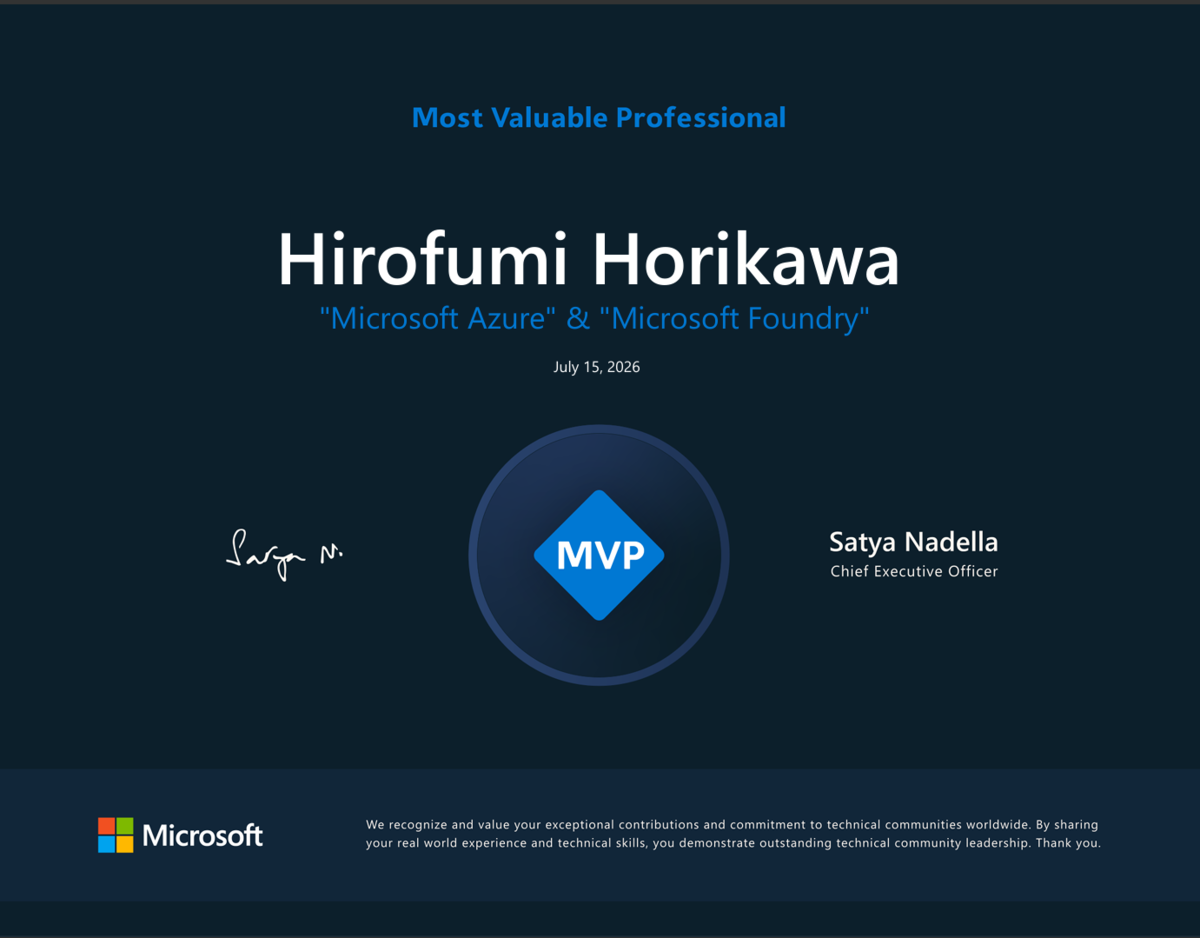
今回初めての更新だったので*2、活動実績の提出から結果を見るまで割とドキドキでした。
更新前は Award Category が Microsoft Azure、Technology Area が Azure Application PaaS だったけど、去年から Microsoft Foundry 周りのブログや公式サンプルへのコントリビュートをみてくれたのか、今回から Award Category と Technology Area に Microsoft Foundry が追加されました。
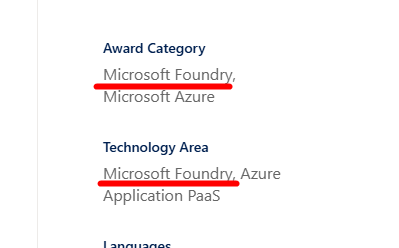
自分の観測範囲だと、この二つの Award Category をペアで取っている人は割といそう。
ちょっと最近停滞気味だけど、次回の更新通過できるよう頑張ります。
Microsoft Foundry Agent Service × Node.js SDKで整理する OAuth同意フロー
以前のエントリーで、Playground (Web UI) で OAuth Identity Passthrough の MCP ツールが動くことを確認した。
uncaughtexception.hatenablog.com
次に SDK(Node.js)から同じエージェントに話しかけたときに、MCP ツール呼び出しがどのように見えるかを検証した。
今回やったこと、観察した挙動、実務で使うときの注意点をまとめる。
なお OAuth Identity Passthrough については、以下の公式ドキュメントにも記載はあるものの、具体的な実装例や細かい運用上の注意までは示されていないため、今回サンプルを作成して挙動を検証してみた。
先に結論
- SDK から会話を作って
responses.createを呼ぶと、Playground と同様にresponse.outputにoauth_consent_requestやmcp_approval_requestといった要素が返る
ブラウザでconsent_linkを開いて同意すると、その会話コンテキストでツール実行が進行する - 同意はトークンの有効期間に依存する(数十分〜1時間程度が目安。環境依存である)
有効期限切れ直後は 401 相当の認証エラーが返り、再度同意が必要になる場合がある
環境と用意したもの
- サンプルスクリプト
chatBasic.js
  const { DefaultAzureCredential, getBearerTokenProvider } = require("@azure/identity");
  const { AIProjectClient } = require("@azure/ai-projects");

  const projectEndpoint = process.env["FOUNDRY_PROJECT_ENDPOINT"];
  const agentName = process.env["AGENT_NAME"];

  const MAX_RETRY_ATTEMPTS = 5;
  async function main() {
    const credential = new DefaultAzureCredential();
    const project = new AIProjectClient(projectEndpoint, credential);
    console.log("Connecting to Foundry Project MCP endpoint and initializing client...");
    console.log(`Project Endpoint: ${projectEndpoint}`);
    console.log(JSON.stringify(await project.connections, null, 2));
    const openAIClient = project.getOpenAIClient();

    console.log("Retrieving agent...");
    const agent = await project.agents.get(agentName);
    console.log(`Agent retrieved (id: ${agent.id}, name: ${agent.name}, version: ${agent.version})`);

    // Create conversation with initial user message
    console.log("\nCreating conversation with initial user message...");
    const conversation = await openAIClient.conversations.create({
      items: [
        { type: "message", role: "user", content: "List VMs in the subscription by using MCP tools." },
      ],
    });
    console.log(`Created conversation with initial user message (id: ${conversation.id})`);

    // Generate response using the agent
    console.log("\nGenerating response...");
    const body = {
      conversation: conversation.id,
    };
    const extra_body = {
      body: { agent_reference: { name: agent.name, type: "agent_reference" } },
    };
    const response = await createResponse(openAIClient, body, extra_body);
    console.log(`Response content: ${JSON.stringify(response, null, 2)}`);
  }

  async function createResponse(openAIClient, body, options, stackLevel = 0) {
    if (stackLevel > MAX_RETRY_ATTEMPTS) {
      throw new Error("Maximum retry attempts exceeded");
    }
    const response = await (async (body, options) => {
      while (true) {
        try {
          return await openAIClient.responses.create(body, options);
        } catch (err) {
          if (!err.error.message.startsWith("Authentication failed when connecting to the MCP server: ")) {
            throw err;
          }
          console.error(JSON.stringify(err, null, 2));
          await new Promise((resolve) => {setTimeout(resolve, 5000)}); // Wait for 5 seconds before retrying
        }
      }
    })(body, options);
    console.error(JSON.stringify(response, null, 2));
    console.log(`Types in received response: ${JSON.stringify(response.output.map((out) => out.type), null, 2)}`);

    const consentRequestsResponse = {
      output: response.output.filter((out) => out.type === "oauth_consent_request")
    };

    if (consentRequestsResponse.output.length > 0) {
      return await consentRequestProcessor(consentRequestsResponse, openAIClient, body, options, stackLevel + 1);
    }

    const mcpApprovalResponse = {
      output: response.output.filter((out) => out.type === "mcp_approval_request")
    };

    if (mcpApprovalResponse.output.length > 0) {
      return await mcpApprovalProcessor(mcpApprovalResponse, openAIClient, body, options, stackLevel + 1);
    }
    return response;
  }

  async function consentRequestProcessor(consentRequestResponse, openAIClient, body, options, stackLevel) {
    console.log(`Received consent request`);
    const consentRequests = consentRequestResponse.output.map((out) => ({ consent_link: out.consent_link, server_label: out.server_label }));

    if (stackLevel === 1) {
      console.log(`The following URL(s) need consent:`);
      consentRequests.forEach((consentRequest, index) => {
        console.log(`  ${index + 1}. ${consentRequest.server_label}: ${consentRequest.consent_link}`);
      });
    }

    console.log(`Please provide consent by opening the URL(s) above within 30 seconds...`);
    await new Promise((resolve) => {
      setTimeout(resolve, 30000);
    });
    console.log(`Finished waiting for user consent.`);
    return await createResponse(openAIClient, body, options, stackLevel);
  }

  async function mcpApprovalProcessor(mcpApprovalResponse, openAIClient, body, options, stackLevel) {
    console.log(`Received MCP approval request`);
    const approvalRequests = mcpApprovalResponse.output.filter(o => o.type === 'mcp_approval_request').map(tool => ({
      type: "mcp_approval_response",
      approval_request_id: tool.id,
      approve: true,
    }));
    return await createResponse(openAIClient, { conversation: body.conversation, input: approvalRequests }, options, stackLevel);
  }

  main().catch((err) => {
    console.error("The sample encountered an error:", err);
  });
- 認証:
DefaultAzureCredentialが使える環境(Azure CLI ログイン等) - 環境変数(必要に応じて):
FOUNDRY_PROJECT_ENDPOINT(Foundry Project MCP エンドポイント)AGENT_NAME(試すエージェント名)
スクリプトの動作
以下のように環境変数をセットして chatBasic.js を実行する
FOUNDRY_PROJECT_ENDPOINT="https://.../api/projects/..." AGENT_NAME="my-agent" node chatBasic.js
- スクリプトは
openAIClient.conversations.createで会話を作り、openAIClient.responses.createでエージェントにメッセージを送信する - エージェントからの応答
responseに応じた処理をするresponse.outputに OAuth の同意リクエスト(oauth_consent_request) を含まれていた場合はconsent_linkをコンソールに表示し、以降30秒間隔で直前のメッセージを再送するresponse.outputに MCP ツールの実行承認リクエスト (mcp_approval_request) が含まれていた場合は承認応答 (mcp_approval_response) を送る- どちらでもなく
response.output_textに値が入っていれば、それをエージェントからの回答としてコンソールに表示する。
フロー概要(状態遷移)
SDK 呼び出しでの基本的な遷移は次の通り。
[初期]
  ↓ "responses.create" を実行
[oauth_consent_request を含む response.output を受信]
  ↓ ユーザーが consent_link を開き同意を行う(UI 操作)
[同意完了] ※ SDK では検知不可
  ↓ responses.create を再実行
[mcp_approval_request を含む response.output を受信]
  ↓ `mcp_approval_response` を明示的に会話に挿入して再送
[ツール実行 -> response.output_text を受信]
  ↓ `response.output_text` を表示
[ツール実行 / 正常終了]
観察したポイント
response.output は配列で返り、配列内の各要素に type が含まれる。
代表的な type ごとの JSON の例は次のとおり。
oauth_consent_request: OAuth での同意リンクを含む出力
consent_link にユーザーに同意を要求するための URL が含まれる。
この URL を開き同意を完了した後に responses.create を再送する(再送しないと次段階に進まないため)。
{
  "output": [
    {
      "type": "oauth_consent_request",
      "id": "oauthreq_...",
      "agent_reference": {
        "type": "agent_reference",
        "name": "...",
        "version": "..."
      },
      "response_id": "resp_...",
      "consent_link": "https://...",
      "server_label": "..."
    },
    :
  ],
  :
}
mcp_approval_request: MCP 承認を求めてくる出力
MCP ツールをどういうパラメータで実行するかを提示し、ユーザーによる承認を待つ。
{
  "output": [
    {
      "type": "mcp_approval_request",
      "id": "mcpr_...",
      "agent_reference": {
        "type": "agent_reference",
        "name": "...",
        "version": "..."
      },
      "response_id": "resp_...",
      "server_label": "...",
      "name": "...",
      "arguments": "..."
    },
    :
  ],
  :
}
output_text: 通常の応答メッセージ
通常のエージェントからの応答メッセージの場合は、response.output 配列内には MCP ツールの実行結果などが格納される。
応答メッセージ自体は response.output_text に格納される。
{
  "output": [
    // MCP ツールの実行結果など
    :
  ],
  "output_text": "...",
  :
}
同意の反映について
ブラウザで consent_link を開くと、Playground での同意と同様の同意画面が開き、同意を完了すると「You can now close this dialog.」のような表示が出る。
ただ SDK 側にはこの「同意が完了した」通知を受け取る仕組みがないため、同意後に再度 responses.create を投げて状態が変わるか確認したり、ユーザー操作で再試行をトリガーする必要がある。
つまずきポイント
実際に動かしてみると、いくつかつまずいた。
- 同意完了後でもすぐに使えないことがある
同意の伝搬やトークンの発行にラグがあるように見える - トークンの有効期限切れタイミングで 401 が返る場合がある
公式ドキュメントの記載内容と違うので注意が必要
- 公式ドキュメントには、
ユーザーがサインインして 1 回同意した後は、今後同意する必要はありません。とあり、一度同意すると再同意は不要に見える ※そうだとしても、スコープ(エージェント単位?ツール単位?その他?)が不明瞭 - ところが、実際には一度同意が完了しトークンの有効期限が切れた状態でメッセージを送ると、以下の様に動作する
- 1 回目のメッセージ送信で 401 エラーが返却(SDK 上は例外発生)
- 2 回目のメッセージ送信で、
oauth_consent_requestで改めてユーザーに同意を要求
- 公式ドキュメントには、
- サンプルスクリプトのようにユーザーが同意する前に定期的にメッセージの再送をしていると、エージェントが自律的に "ツールを使わない" と判断することがある
- プロンプトやモデル選択で回避できるのかもしれないが、ユーザー同意のメッセージ再送方式(ポーリング、ユーザーインタラクション、etc)の設計が必要
- ちなみに、Playground では
consent_linkをポップアップウィンドウで開いていて、同意後にウィンドウが閉じられたことが Playground 側で検知できるので、これをトリガーに再送している模様
まとめ
Playground で確認した挙動はそのまま SDK 上でも再現されていた。
ポイントは「同意の検出と再試行フロー」をどう作るか。
サンプルのスクリプトではポーリングでの再試行を実装したが、同意がない状態で MCP ツール利用が必要なメッセージ送信を繰り返すと、エージェントがツールを使わない判断をする場合があるため、同意後にユーザー操作をトリガーに再試行する設計を推奨。
.envを自動解決してCLIを実行するコマンドプロキシ runx
はじめに
ディレクトリごとに使う環境変数を切り替えたい場面は、クラウド運用やアプリ開発で頻出する。特に Azure CLI のように、同じコマンドで複数プロファイルを使い分けるケースでは、毎回 export したり、実行オプションを長く書いたりする手間が積み重なりやすい。
このエントリでは、runx が解決する課題、開発の背景、動作の仕組みを短く整理し、Azure CLI の具体例で使い方をまとめる。
結論
runx は、いつものコマンド名のまま、実行時に env ファイルを解決して環境変数を注入できるコマンドプロキシマネージャ。
runx addを一度実行すれば、以後は通常どおりazやterraformを実行可能- env ファイルは実行ディレクトリから親へ、最後にホームまで探索
- 複数
--envfileは左から順にマージし、後勝ちで上書き
常時自動読み込みより、コマンド実行時だけ適用したい運用に向いた選択肢。
runxとは
runx は、環境変数ファイルを読み込んでからコマンドを実行するためのクロスプラットフォームツール。単一バイナリで動作し、Linux/macOS/Windows に対応する。
主な特徴は次のとおり。
- コマンドプロキシを作成し、通常のコマンド呼び出しで env を反映
- 実行時のディレクトリに応じた env ファイル探索
- 複数 env ファイルのレイヤー合成(後勝ち)
runx execによる一回限り実行runx envで、実際に注入される内容を事前確認
インストール
まずは GitHub Releases から取得するのが簡単。
Linux では .deb パッケージ、または tar.gz の単体バイナリを利用できる。
curl -LO https://github.com/horihiro/runx/releases/download/v<version>/runx_<version>_<arch>.deb
sudo apt install ./runx_<version>_<arch>.deb
runx --version
tar.gz を使う場合は次のとおり。
curl -LO https://github.com/horihiro/runx/releases/download/v<version>/runx-<os>-<arch>-v<version>.tar.gz
tar xzf runx-<os>-<arch>-v<version>.tar.gz
sudo install -m 0755 runx /usr/local/bin/runx
runx --version
Windows では winget で導入できる。
winget install --id horihiro.runx
runx --version
ソースから試したい場合は、Go が入った環境で go build でもビルド可能。
なぜ作ったか
背景はシンプルで、プロジェクトごとに設定を分けつつ、操作感は変えたくないという要求にある。
例えば Azure CLI では、AZURE_CONFIG_DIR を切り替えることで認証情報や設定を分離できる。一方で、都度エクスポートしたり、ラッパースクリプトを手で管理したりすると、運用が増えるほど管理コストは上がっていく。
runx の設計方針は次の三点。
- 普段のコマンド体験を壊さない
- 実行時コンテキスト(カレントディレクトリ)を素直に利用
- OS 差分をツール側で吸収
仕組みの概要
内部では、runx add で元コマンドを呼ぶ薄いプロキシを作成する。
- Linux/macOS: シェル設定に関数を追加
- Windows:
.cmdプロキシを配置(User/Machine PATH を判定)
プロキシから runx exec が呼ばれ、指定した env ファイル候補を解決し、環境変数を注入してから実コマンドを実行する流れ。
env ファイル解決ルールは次の順序。
- 絶対パス指定ならそのパスのみ確認
- ファイル名指定なら、カレントディレクトリから親へ順に探索
- 見つからなければホームディレクトリを最後に確認
複数ファイルを指定した場合は左から順に読み込み、同一キーは後ろのファイルで上書きされる。
使い方(Azure CLIを例に)
AZURE_CONFIG_DIR をディレクトリごとに切り替える最小構成の例を示す。
- ディレクトリと env ファイルを用意
mkdir -p ~/work/az_profile1 ~/work/az_profile2

cat > ~/work/az_profile1/.azclienv <<'EOF'
AZURE_CONFIG_DIR=~/.azure_profile1
EOF

cat > ~/work/az_profile2/.azclienv <<'EOF'
AZURE_CONFIG_DIR=~/.azure_profile2
EOF
azをプロキシ登録
runx add az --envfile=.azclienv
- 通常どおり
azを実行
cd ~/work/az_profile1
az account show

cd ~/work/az_profile2
az account show
初回のみ、各プロファイルで az login が必要になる。現在位置で注入される内容を確認したい場合は runx env az が有効。
他ツールとの比較
この領域には実績あるツールが既にあり、runx は置き換えよりも使い分けの位置づけになる。
direnv- ディレクトリ入退場に応じた自動ロード/アンロード
- 常時フック型の自動化に強み
- Windows 非対応
dotenv-cli/dotenvx系- 一回実行の明示的な env 注入に強み
- コマンドごとの明示実行がわかりやすい
runxadd/list/removeで永続プロキシを管理- コマンド名はそのまま、実行時だけ env を適用
- Windows の PATH 優先順位まで含めて吸収
どれが優れているかという話より、 自動フック中心か、明示実行中心か、普段のコマンド体験を維持したいかで選ぶのが自然。
制限・注意点
運用前に把握しておくとハマりにくいポイントを列挙する。
- Linux/macOS では
runx add後にシェル設定の再読み込みが必要 - Windows では元コマンドが Machine PATH にあると
runx addに管理者権限が必要 - env ファイルが見つからない、または構文不正のときは期待どおりに実行できない
- 同じコマンドに対して他のラッパー機構を併用すると競合する可能性
調査時は RUNX_DEBUG=2 を使うと探索パスを追えるため、原因切り分けが速い。
まとめ
runx は、環境変数の切り替えを日常のコマンド操作に自然に埋め込むためのツール。
複数クラウド環境や複数プロファイルを行き来するチームでは、 毎回意識して切り替える負担を下げ、操作ミスの抑制にもつながる。
まずは runx exec の一回実行で試し、手応えがあれば runx add で常用コマンドをプロキシ化する流れがおすすめ。
Azure Functions で Easy Auth + OBO な MCP サーバーを作り、Microsoft Foundry Agent Playground から呼び出す
Microsoft Foundry のエージェントから呼ぶ MCP ツールで、OAuth 2.0 On-Behalf-Of(以下、OBO)フローを使って downstream API を実行した、という話。
先に結論
今回確認できた成果は、次の 2 つ。
- Easy Auth を有効にした Azure Functions の MCP endpoint へ Microsoft Foundry から OAuth ID パススルーで認証できた。
- MCP Tool Trigger 関数内で、Easy Auth 経由で受け取ったユーザートークンを使い、downstream API 実行用トークンを OBO フローで取得できた。
これにより、MCP ツールと downstream API の両方を利用者の権限コンテキストで実行できる。
マネージド ID やエージェント ID の権限設定も不要。
構成
今回の構成はこんな感じ。
- MCP サーバー: Azure Functions
- MCP endpoint:
https://<function-app>.azurewebsites.net/runtime/webhooks/mcp - 入口認証: App Service Authentication (Easy Auth)
- 関数内メイン処理: Azure Functions の MCP Tool Trigger 関数内で、OBO によるトークン交換と Azure Resource Graph 実行
Functions 側の設定
最低限、ここは揃えておく。
- Easy Auth 有効化
- Expose an API のスコープ確認
api://<client-id>/user_impersonation
MCP Tool Trigger 関数の実装
今回の題材は、AI エージェントに Azure REST API を「チャットしているユーザーの権限」で実行させる MCP ツール。
ユーザーを特定するために Easy Auth で認証し、Azure REST API 呼び出し用トークンの取得には OBO フローを使っている。
サンプル実装は以下。
関数内でやっていることは、次の 4 ステップ。
- 受信リクエストからユーザートークンを取り出す
- Entra token endpoint で OBO 交換する
OBO 交換に必要な以下の情報は、Easy Auth 有効化時に設定されるアプリケーション設定から取得- Tenant ID
- Client ID
- Client Secret
- OBO 交換済みトークンで downstream API (Azure REST API の Resource Graph) を呼ぶ
- 実行結果を JSON 文字列で返す
Entra アプリの設定
Easy Auth 有効化時に作成された Entra アプリの API Permissions で、downstream API を追加して管理者同意しておく。
今回は downstream API として Azure REST API を使うので、Azure Service Management を追加し、Grant admin consent を実行する。
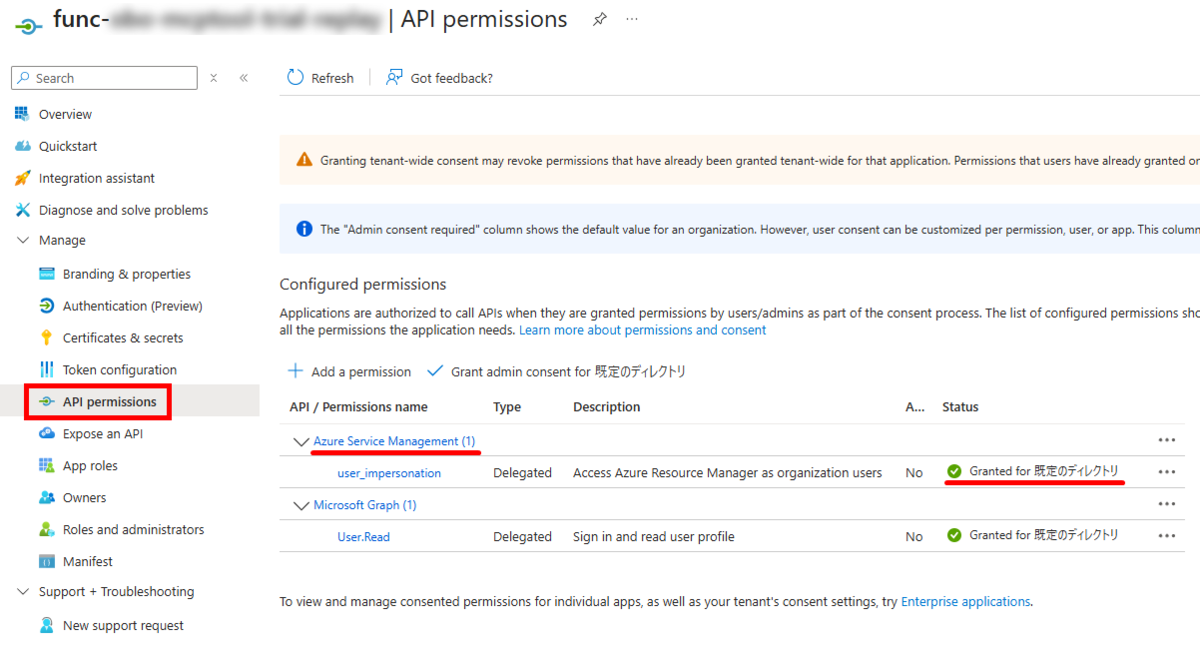
これで MCP ツール側の準備は完了。
Microsoft Foundry 側の設定
次に、Microsoft Foundry 側で MCP ツールを追加する。
MCP ツール接続を OAuth ID パススルーで作る場合、設定は概ね次の形。

「Scope」には Application ID URI ではなく、api://<client-id>/user_impersonation のように実際のスコープを設定する。
加えて、今回はクライアントシークレットの設定も必要だった(後述)。
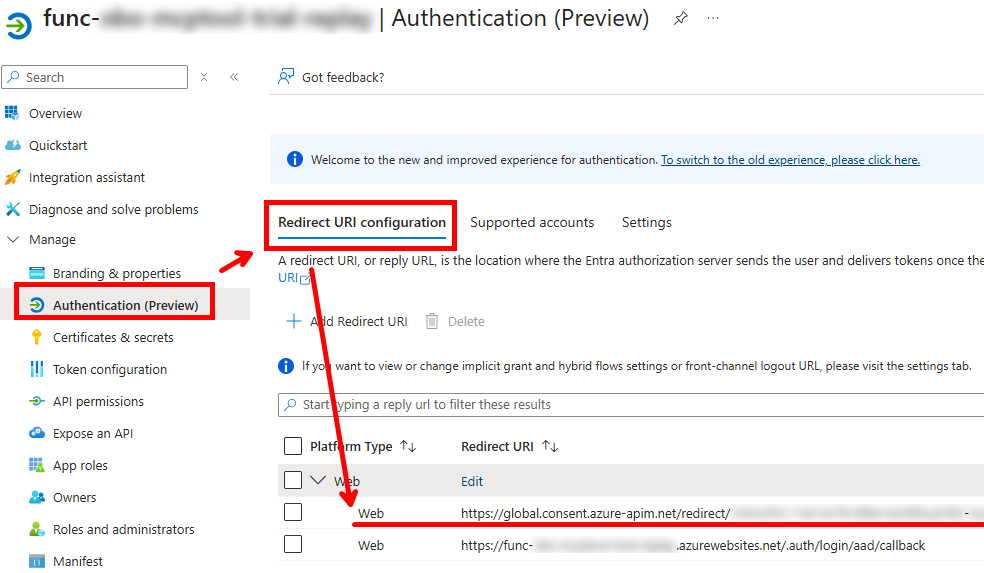
MCP ツール作成後にリダイレクト URI が表示される。
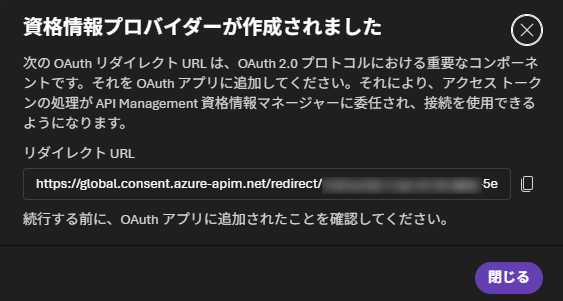
これを忘れずに Entra のアプリ登録へ追加しておく。
Playground で実験
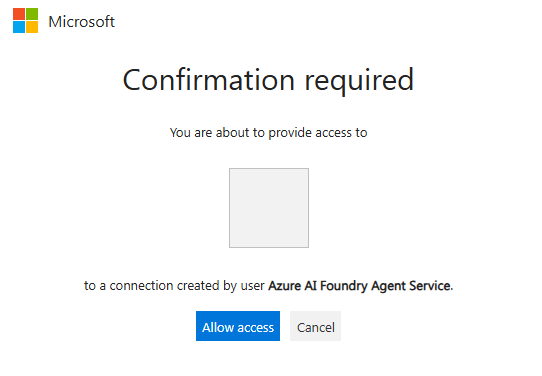
OAuth ID パススルーの MCP ツールを設定して Microsoft Foundry の Playground でチャットを開始すると、最初に MCP ツール利用許可を求めるポップアップが表示される。
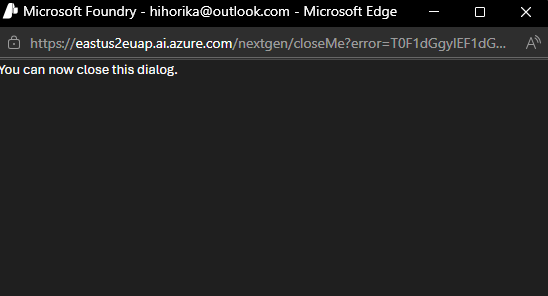
これを許可すると「You can now close this dialog.」と表示される。
ポップアップを閉じると、Playground 側には「サインインに成功しました」と表示される。
正常に認証されていれば、この後チャットで「リソースグループを列挙して」などと依頼すると MCP ツールが実行され、結果が返ってくる。
そう、正常であれば。
実際につまずいたポイント
もちろん最初からはうまくいかず、いくつかつまずきポイントがあった。
そもそもエラーが起こっているかどうかがわからない
うまく動かず試行錯誤していたとき、MCP ツール使用許可を与えて「サインインに成功しました」と表示された直後に、同じメッセージがもう一度出る挙動があった。
「大事なことなので 2 回言った」のかもしれないが、明らかに怪しい。
2 回とも許可後に「サインインに成功しました」と出ていたのに、実際には MCP ツールを使えなかった。

「成功した」と表示されるので、最初は認証後の処理が失敗しているのだと思っていた。実際には、認証そのものが失敗していた。
認証失敗に気づけたのは、ポップアップに「You can now close ...」と出た時の URL に ?error=T0F1dGgyIE... が付いていたから。
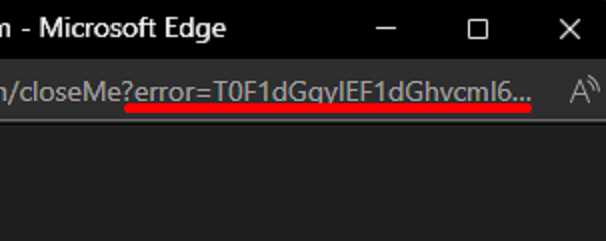
いや、わからんて。
認証成功時の動きと比べても、見た目の差分はほぼこの URL だけだった。
この error パラメータ値をコピーして Base64 デコードすると、OAuth2 Authorization Flow failed for service Generic Oauth 2 with PKCE. ... と出て、ここでようやく認証失敗を確信できた。
デコードされたエラーの一部
OAuth2 Authorization Flow failed for service Generic Oauth 2 with PKCE. OAuth 2 sign in 'OAuth2LoginStrategyCore' failed to exchange code for access token. Client ID and secret sent in form body.. Response status code=Unauthorized. Response body: {"error":"invalid_client","error_description":"AADSTS7000218: The request body must contain ...
ここでようやく、トラブルシュートに使える情報が出てきた。
AADSTS7000218 (invalid_client)
OAuth 設定不整合の典型例。
これが起きていた原因は、公式ドキュメントに書かれていた設定例を

そのまま当てはめてしまったこと。
ただ、今回はクライアントシークレットが必要な構成だった。
Easy Auth の Entra アプリで Allow public client flows がオフだった点も、切り分けの重要ポイントだった。
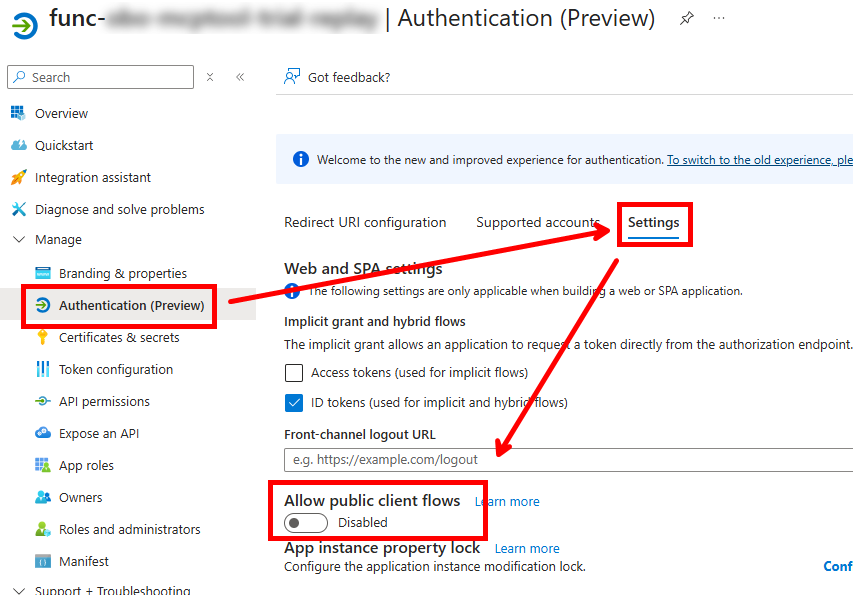
このエラーは、OAuth クライアント種別(public / confidential)と実際の設定値の組み合わせで発生条件が変わる。
Microsoft Foundry で secret 空欄のまま失敗したら、まずこの整合を確認するのが近道。
403 が返る
これは、切り分けのために Visual Studio Code から接続したときに出たエラー。
Microsoft Foundry 上で 403 エラーが見えたわけじゃない。
トークン付きで叩いても 403 の場合は、まず Easy Auth 側を疑うのが早い。
- Allowed token audiences が
audと一致しているか - 制限をかける場合、
azp/appidが許可済みか - Easy Auth の
Client application requirementが実態とあっているか
検証フェーズはAllow requests from any applicationで先に疎通確認。本番で段階的に絞るのが安全。
このあたりを順にチェックしていく。
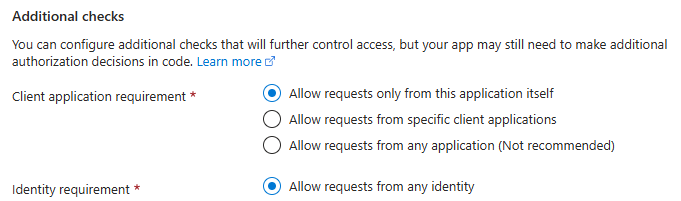
MCP Tool Trigger 関数でのトークン取得
MCP Tool Trigger 関数の実装でもつまずいた。
公式ドキュメントの HTTP Trigger 向け説明をそのまま当てはめると、Easy Auth では X-MS-TOKEN-AAD-ACCESS-TOKEN ヘッダーにトークンが入る想定になる。
一方、今回の MCP Tool Trigger では HTTP ヘッダーが関数の第一引数(toolArguments)側の transport.properties.headers に入ってきた(ドキュメントは見つけられなかったが、実装上は ここ と ここ あたりが該当しそう)。
Azure Functions 上で実行して X-MS-TOKEN-AAD-ACCESS-TOKEN ヘッダーの有無を確認したが、今回は見つからなかった。
代わりに Authorization ヘッダーがそのまま入っていたため、Bearer を除去してトークンを取り出した。
この点は実行環境やクライアント実装差の影響を受ける可能性があるため、まずは実際の入力ヘッダーをログで確認するのが安全。
トークン取り出し例:
export async function mcpToolTrigger(toolArguments: unknown, context: InvocationContext): Promise<string> {
  const transport = toolArguments['transport'] as {
    properties?: { headers?: { [key: string]: string } }
  } || {};

  const delegatedUserToken =
    transport?.properties?.headers?.Authorization?.split(' ')[1] || '';

  // OBO 交換の処理と downstream API の実行
}
Authorization のヘッダー名はクライアント実装によって大小文字ゆれがあり得るため、必要なら authorization もフォールバックで確認すると安全。
まとめ
Easy Auth で受けたユーザートークンを OBO で downstream API 用トークンに交換し、そのまま Azure Resource Graph を実行する MCP サーバーを Azure Functions 上に実装できた。さらに、その MCP サーバーを Microsoft Foundry の Agent Playground から呼び出せることも確認できた。
これで、エージェントから利用者権限のまま Azure 情報を扱う経路を作れたことになる。MCP ツール認証だけでなく、その先の downstream API 実行まで含めて成立することを確認できたのが今回の収穫だった。
Playground でここまで確認できたので、次は SDK からエージェントと会話したとき、この MCP ツール呼び出しがどう見えるかを試してみたい。
参考
Git の差分から CodeTour を生成する CLI ツールを作った。
はじめに
最近参加した👇のハンズオンイベントで、CodeTour を活用してコードの変更を段階的に説明しているのを目にした。
これはハンズオンを効率的に進められる素晴らしいアイデアだと思い、自分が主催するハンズオンでも CodeTour を活用したいと。
でも、実際に初期状態から完成形へと導く CodeTour ファイルを手作業で作成するには、各ステップでどのファイルのどの行が変更されたかを記録し、説明を付けていく作業が必要。
これは時間が大変そうだ。
変更の記録は Git のコミットのログ差分でわかってんだから、そこからサクっと作れればいいのに...
そう思って作った*1のがこの git2codetour ・
これを使えば、Git のコミット履歴から CodeTour ファイルを簡単に作れる。
そもそも CodeTour とは?
CodeTour は、コードベースをステップバイステップでガイドするツアーを作成できる VS Code の拡張機能。
コードの特定の場所に説明を付けて、順番に閲覧できるため、ハンズオンイベント、チュートリアル、オンボーディングなどに使える。
git2codetour の特徴
今回作った CLI ツール git2codetour は、名前の通り、ローカルの Git リポジトリの各コミットの差分を読み取って CodeTour の設定ファイル形式で出力する。
https://www.npmjs.com/package/@horihiro/git2codetourwww.npmjs.com
1. シンプルな使い方
npx を使って簡単に実行:
npx @horihiro/git2codetour <commit1> <commit2> -o changes.tour
2. 柔軟なコミット指定
比較したいコミットは、
- コミットハッシュ
- ブランチ名
- タグ名
どれでも指定可能*2。
3. 3つ以上のコミットにも対応
複数のコミットを指定することで、段階的な変更の流れを1つのツアーとして確認できる:
npx @horihiro/git2codetour commit1 commit2 commit3 -o progression.tour
この例だと、commit1 から commit2 の変更と、commit2 から commit3 への変更の両方が記録される。
4. ファイルフィルタリング
glob パターンを使って、特定のファイルだけを対象にできる:
npx @horihiro/git2codetour main develop -f "src/**/*.ts" "*.md"
5. 豊富な言語サポート
JavaScript/TypeScript、Python、Java、C/C++、C#、Go、Rust、Ruby など、主要な言語のシンタックスハイライトに対応*3。
実際の使い方例
ケース1: ハンズオンイベント用のチュートリアル作成
ハンズオンで作成する予定のアプリケーションを事前に Git で開発しておき、段階的にコミットしておく:
npx @horihiro/git2codetour initial-state step1 step2 final -o hands-on.tour
生成された .tour ファイルを参加者に配布すれば、initial-state からの各ステップでどこをどう変更するかを明確に示せる。
ケース2: プログラミング学習教材の作成
初心者向けの学習教材として、簡単なアプリケーションを段階的に構築する過程を記録:
npx @horihiro/git2codetour v0.1 v0.2 v0.3 v1.0 -t "TODO アプリを作ろう" -o tutorial.tour
v0.1 v0.2 v0.3 v1.0 の各バージョンタグでどのように機能を追加していったかを、実際のコードとともに説明できる。
ケース3: 新メンバーへのオンボーディング
プロジェクトの重要な機能がどのように実装されたかを説明する際にも活用できる:
npx @horihiro/git2codetour feature-start feature-complete -t "認証機能の実装" -o onboarding.tour
出力形式
git2codetour は CodeTour が定めたスキーマの JSON を出力する:
{
  "$schema": "https://aka.ms/codetour-schema",
  "title": "Changes from abc123 to def456",
  "description": "Diff between commits...",
  "steps": [
    {
      "file": "path/to/file.js",
      "description": "**Added:**\n```javascript\ncode here\n```",
      "line": 42
    },

      :

    {
      "file": "path/to/file.js",
      "description": "**Added:**\n```javascript\ncode here\n```",
      "selection": {
        "start": {
          "line": 1,
          "character": 1
        },
        "end": {
          "line": 1,
          "character": 15
        }
      }
    }
  ]
}
各ステップ(steps 配列の各要素) に含まれる情報:
file: 変更されたファイルのパスdescription: 追加・削除・変更内容(シンタックスハイライト付き)line: 変更箇所の行番号(変更が1行の場合)selection: 変更範囲(変更が複数行にまたがる場合)
出力ステップ例
出力されるステップは以下の4種類:
- ファイル作成ステップ
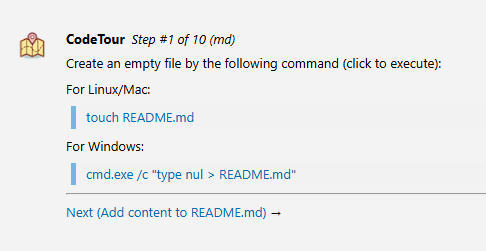
- コード置換ステップ
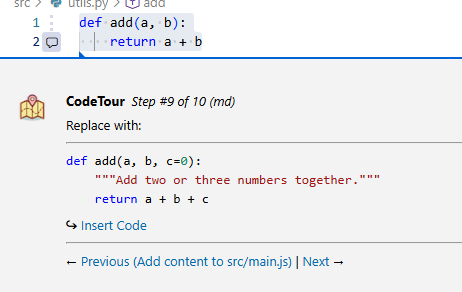
- コード削除ステップ
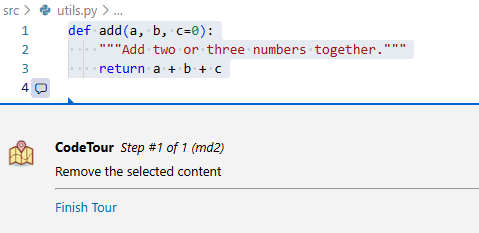
- コード追加ステップ
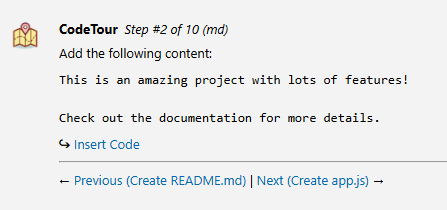
デフォルトではシンプルな指示文(英語)が入る。
実際に使う時は、CodeTour 拡張機能から適当な文言に変更してもらう前提。
インストールと使い方
npx で直接実行
npx @horihiro/git2codetour <from-commit> <to-commit> [options]
オプション
-r, --repo <path>: ローカルの Git リポジトリのパス(デフォルト: カレントディレクトリ)-t, --title <title>: CodeTour のタイトル-d, --description <description>: CodeTour の説明-f, --filter <pattern1> <pattern2> ...: 対象ファイルを絞り込む glob パターン-o, --output <file>: 出力ファイルパス(デフォルト: 標準出力)-a, --append: 出力ファイルへ追記するかどうかのフラグ
技術スタック
- TypeScript: 型安全な開発
- Commander.js: CLI インターフェース
- simple-git: Git 操作
使用上の注意
git2codetour というよりも CodeTour 拡張機能自体の注意。
CodeTour 拡張機能から .tour ファイルで定義したツアーを再生すると、.tour ファイル内の line プロパティ(操作対象の行番号)が更新されるっぽい。
line プロパティがあるステップには、行の増減に応じて数値が増えたり減ったりするし、selectionプロパティで範囲指定している line プロパティがないステップには "line": null が強制的に挿入される。
つまり、一度再生した後は.tour ファイル内の各ステップの操作対象の行番号が変わっているので、ファイルだけ元に戻してもう一度再生しても、再生結果が変わってしまう。
なので、リプレイしたければ .tour ファイル自体も元に戻さないといけないことに注意。
これは CodeTour 拡張機能の挙動なので、正直何ともならない。
まとめ
git2codetour を使えば、Git のコミット差分を分かりやすい CodeTour 形式に変換できる。これにより:
- ハンズオンイベントの準備が楽に: 段階的なチュートリアルを自動生成
- 学習教材の作成が簡単: コードの変化を追いやすい形で記録
- オンボーディングが効率化: 新メンバーへの説明がスムーズ
- ドキュメント化が容易: 実装の過程を記録として保存
といった場面で、手作業で CodeTour ファイルを作成する手間が大幅に削減される。
特に、「コードがどのように進化していったか」を伝える必要がある場面で使える(はず)。
フィードバック募集中
使ってみた感想や要望があれば、GitHub Issues へ。
Visual Studio Code で Azure Cloud Shell を開く
2025 年の最後の JAZUG での LT で喋った、Azure Cloud Shell (以下、Cloud Shell)を VSCode.dev で開くデモについて改めて*1。
まずは実際の動作をご覧あれ。
youtu.be
やっていることはシンプル。
vscode tunnelコマンドでリモートトンネルを作る- 動画では Micorosoft のアカウントを使用
- 作ったリモートトンネルを、
insiders.vscode.dev*2で開く- リモートトンネルを作った時のアカウントでログインする
- URL フォーマット:
https://insiders.vscode.dev/tunnel/${TUNNEL_NAME}/PATH/TO/WORKSPACE https://insiders.vscode.devを開いてから、リモートトンネルの拡張機能から指定してもOK
その後は、CloudShell 内を Visual Studio Code 的なユーザーインターフェースで操作できる。
GitHub Codespaces と似てるけど、GitHub Codespaces と違って環境は固定。
とはいえ、ある程度のツールはそろっているので、そこまで困らない気はする。
あとGitHub Codespacesは特定のリポジトリから起動するけど、こっちはリポジトリとの関連は無し。
ローカルからファイルをアップロードして、それを編集した後に、、例えば Azure のリソースを作ったり変更したり、という使い方ができるので、利用シーンで使い分けはできるはず。
補足
以前はCloud Shell 内でも code コマンドを使えばテキストエディターを起動することもできたけど、このコマンドがクラシック UI 限定に。
もちろん vi 、 nano とといったエディターが CloudShell には入っているけど、Cloud Shell 内でのファイル編集が億劫に感じてしまい、Cloud Shell 自体を敬遠しがちになってた。
そんな中、たまたま Cloud Shell に Visual Studio Code の CLI を発見。
リモートトンネル機能を試してみたら動いた。
特に Web ブラウザー限定という訳でもなく、GitHub Codespaces 同様、ローカルPC上の Visual Studio Code (Insider 含む) からリモートトンネルに接続すれば問題なく開ける。
なので、自分のような、ファイルを閉じようと ctrl + w でウィンドウごと閉じがちな人には、Visual Studio Code から接続する方が重宝しそう。
超重要な補足
Cloud Shell の動作上、既定のタイムアウトは 20 分間。
20分間、リモートトンネルを作っている Cloud Shell の操作*3がないと、Web ブラウザーと Cloud Shell との間の Web Socket が切断され*4、その後 Web Socket 接続が失った Cloud Shell のインスタンスは削除される。
リモートトンネルは Cloud Shell のインスタンスから作っているので、Cloud Shell のインスタンスが削除されればリモートトンネルも切断されてしまう。
つまり、リモートトンネルを維持するためには、クライアントが Web ブラウザーだろうが VSCode だろうが、vscode tunnel コマンドを実行している Cloud Shell のインスタンスを維持しないといけなく、その為にはCloud Shell 側のウィンドウまたはタブを定期的に操作しないといけない。
宣伝タイム*5
そんな時は、弊拡張機能 TweakIt for Microsoft Azure Portal をお使いいただければ。
以前は Azure Portal Plus という名前で公開してたけど、「名前変えろ」と権利者から警告を受けた*6ので名称変更したこの拡張機能、Cloud Shell 周りに機能もいくつかご用意。
そのうちの一つが、Cloud Shell のセッションを 20 分以上維持する機能。
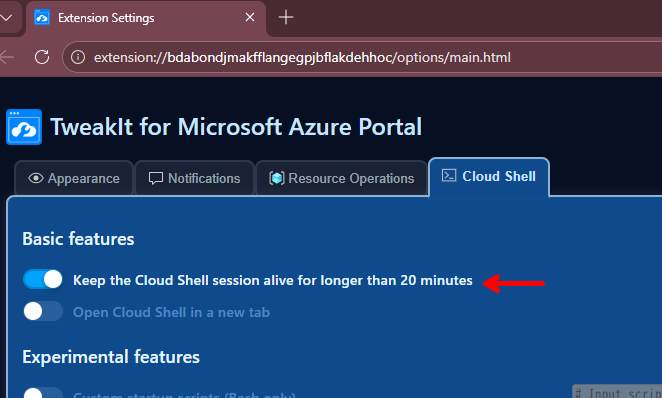
Azure 側での Cloud Shell インスタンスを強制解放されることもあるので、流石に丸一日セッションを維持することは現実的ではないしできないだろうけど*7、2, 3 時間だったらセッション維持できる。
Cloud Shell を使っている時によくある、
ちょっと離席してたらセッションが終了してた
みたいな事態は防げるので、Visual Studio Code から Cloud Shell を操作したい時は、合わせてコチラの利用も検討を。
*1:1月初旬に insiders.vscode.dev でリモートトンネルが開けなくなるバグが発生してたので割と手間取った
*2: https://vscode.dev は組織アカウントが必要。個人アカウント(~@outlook.com とか)では開けない
*3:厳密には、ターミナルへの文字出力や画面サイズ変更、といった画面への反映処理
*5:ある意味本編
*6:詳細はコチラ https://uncaughtexception.hatenablog.com/entry/2025/08/20/083000
